Break object by elements

Vasyl Lukianenko
Vasyl Lukianenko
3D Artist and Technical Author

There are situations when a complex model must be divided into separate parts (objects).
Look at the screenshot below, we need each kettlebell to be a separate object.


single object
Loading...

You can, of course, select element by element, do Detach, but it is too long if the object is more complicated. Surely there are scripts or plugins that will help with this.
But we will look at the way in which this can be done using standard 3Ds Max methods.

Step 1

We need to convert the object into an Editable Mesh. To do this, select the object, click the right mouse button, from the context menu select Convert To → Convert to Editable Mesh.
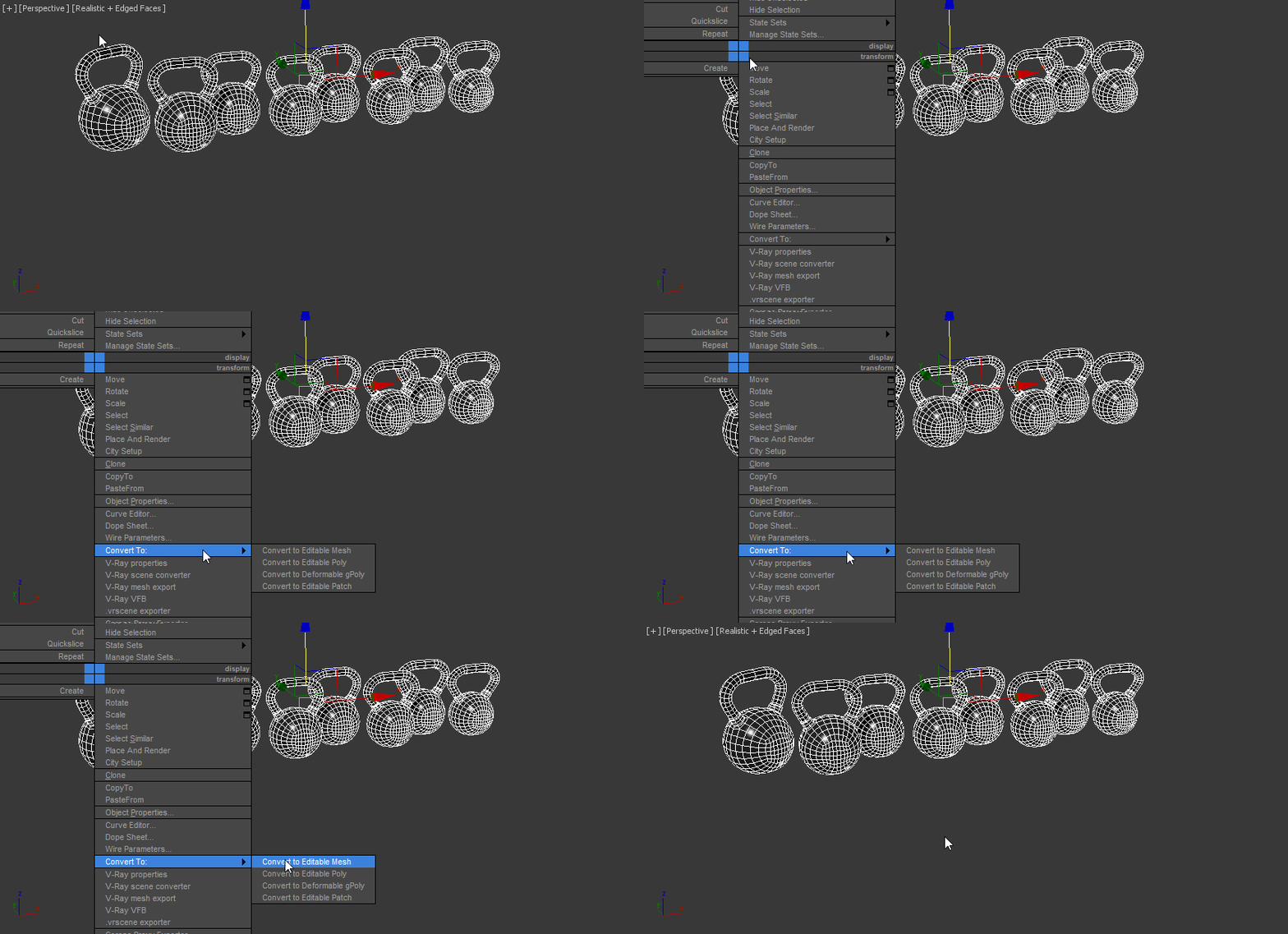
convert to mesh
Loading...

Step 2

Switch to edit Elements. Set the value to 180 for Explode.
Make sure you have the option Objects enabled.
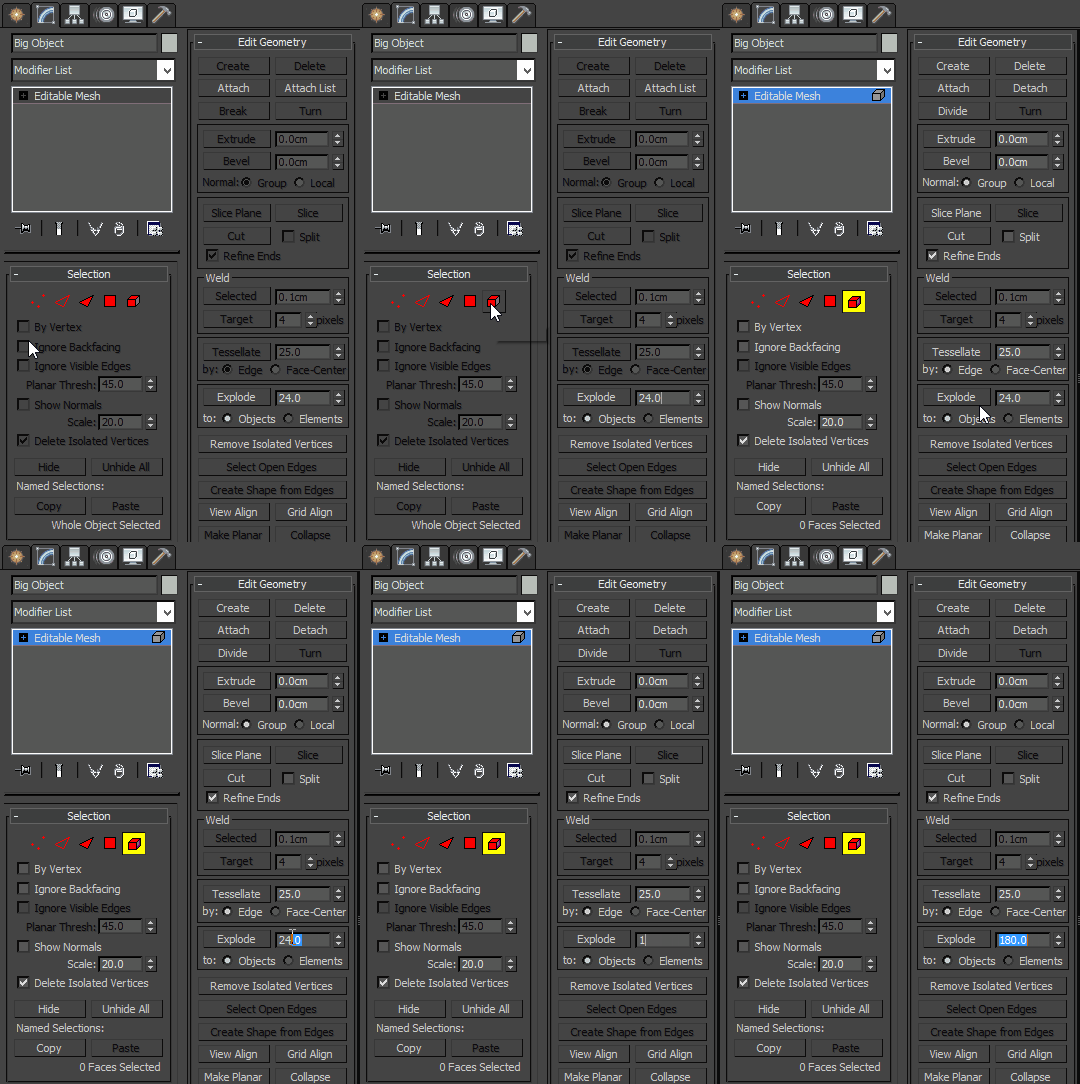
mesh explode
Loading...

Step 3

Select all items by pressing Ctrl + A, then click the button Explode. In the window that appears, you can write the names of new objects. After these actions, your model will be divided into different objects.
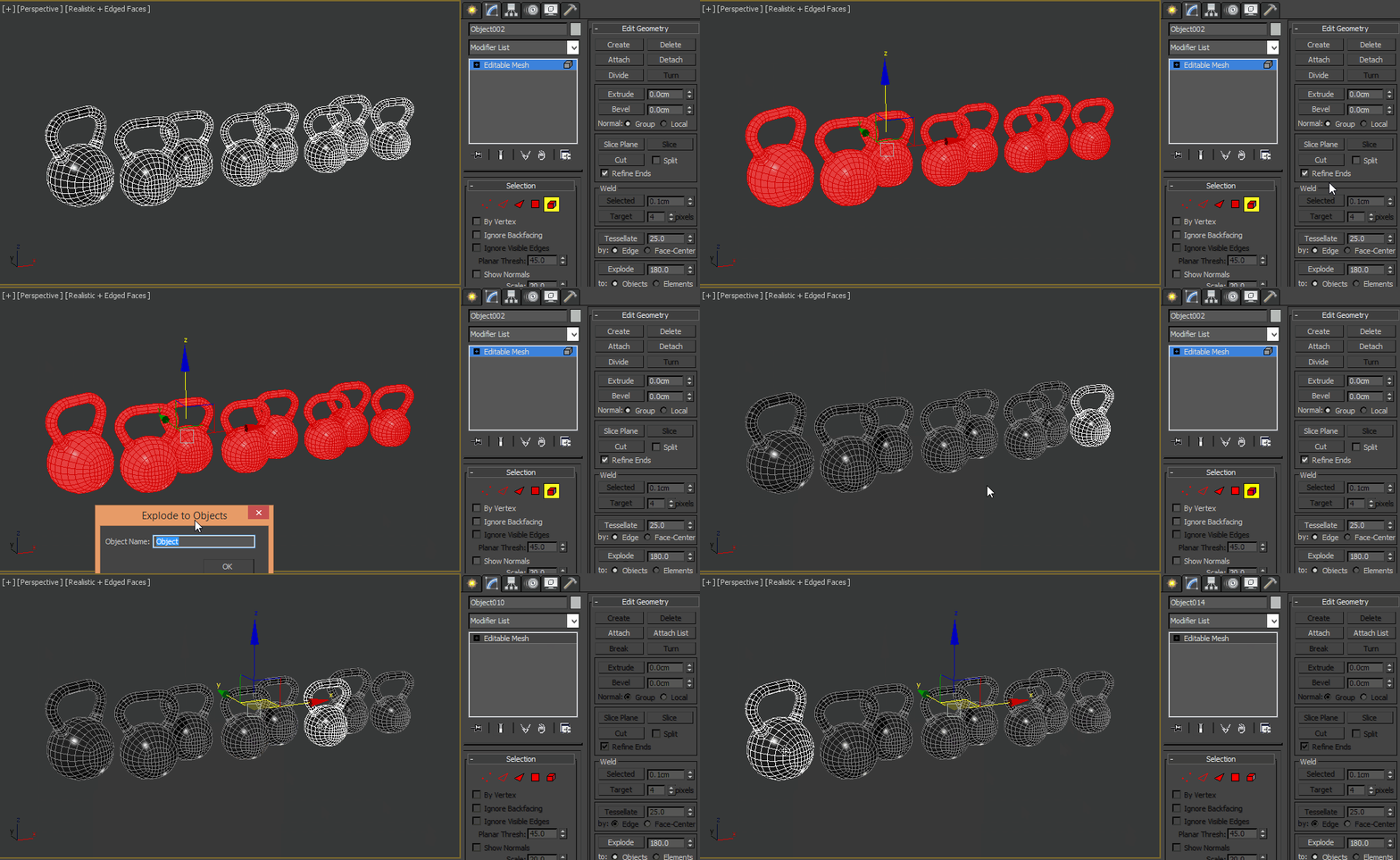
setup mesh
Loading...

Step 4 (optional)

You can quickly set the center of mass (Pivot Point) using the Transform Toolbox.
To do this, go to the dropdown menu Edit → Transform Toolbox.
Select objects, in the Align Pivot group, click the button Center, then set the option to Min and select the axis Z.
Thus, the Pivot Point will be at the base of each kettlebell.

transform toolbox
Loading...

FAQ

1. What is this article about?
This article explains how to break objects into elements in 3ds Max and describes different methods for splitting complex geometry into separate objects.
2. What does “breaking an object by elements” mean?
It is the process of converting each individual element inside an Editable Poly or Editable Mesh into a separate scene object.
3. When is it useful to split objects by elements?
This workflow is commonly used when working with imported models, preparing game assets, animation setups, and scene optimization.
4. What is the difference between an Element and an Object?
An Object is a standalone scene entity, while an Element is a part of geometry inside a single object.
5. Why do some models contain many elements inside one object?
This often happens after importing models from other software, CAD systems, or 3D asset libraries.
6. What are the advantages of splitting by elements?
It simplifies editing, material assignment, animation, export workflows, and overall scene organization.
7. Can a large number of elements be separated automatically?
Yes. Depending on the method, it is possible to automatically convert each element into a separate object.
8. Does the number of objects affect performance?
Yes. A large number of separate objects can increase scene complexity, so a balance between usability and performance is important.
9. Does splitting affect materials?
In most cases materials remain intact, but results depend on the structure of the original model and the method used.
10. Is this approach suitable for game assets?
Yes. Splitting by elements is commonly used when preparing assets for game engines and real-time applications.
11. Should objects be merged back after editing?
Not necessarily. It depends on project requirements, performance considerations, and workflow preferences.
12. Can splitting help with animation?
Yes. Separate objects are easier to animate, hide, show, and control independently.
13. Does splitting affect UV mapping?
In most cases, existing UVs remain unchanged after separating elements.
14. Can this method help clean imported scenes?
Yes. Splitting objects helps organize complex scenes and makes further editing easier.
15. What types of models require this workflow most often?
Architectural assets, furniture, CAD models, game assets, and complex imported scenes.
16. Who is this article useful for?
This article is useful for 3D modelers, technical artists, visualization specialists, game developers, and anyone working with complex geometry in 3ds Max.
Vasyl Lukianenko
Vasyl Lukianenko
3D Artist and Technical Author
Vasyl Lukianenko is a 3D artist and technical author focused on practical workflows, optimization, and production-ready techniques. He publishes tutorials, courses, and tools to help artists work faster and get cleaner results.
{{commentsMsg}}
  

No one has posted a comment yet
{{comment.lastname}} {{comment.name}} {{comment.date}}
{{comment.text}}
Sponsored content